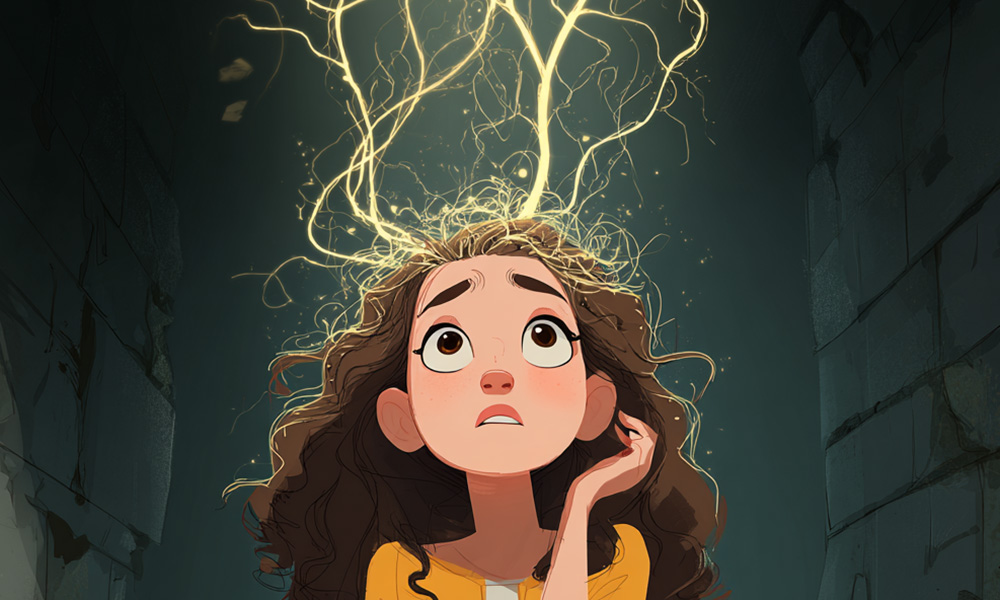
You woke up thinking about him. Maybe it was a dream. Maybe it was the first conscious thought that entered your brain before you even opened your eyes. Either way—there he was. Again.
And now you're here, probably at some ungodly hour, searching for answers. Wondering why you can't stop. Wondering what's wrong with you. Wondering if the fact that he's still taking up this much space in your head means you're not really over it—or worse, that you never will be.
You're exhausted from the mental loops. The replaying of conversations. The imagining of what you should have said. The wondering what he's doing right now, who he's with, whether he ever thinks about you.
And underneath all of that, there's shame. Because you feel like you should be past this. You feel like a strong, smart woman wouldn't still be obsessing over someone who hurt her.
I need you to hear something, and I need you to really let it land:
You are not crazy.
You are not weak.
You are not 'still in love with him.'
Your brain is experiencing the same neurological withdrawal as someone coming off cocaine. That's not a metaphor. That's neuroscience.
Understanding exactly what's happening in your brain is the first step to making it stop.
I'm Tania. I spent years trapped in these same loops—thinking about him constantly while running a business, raising my son, trying to function. And I'm going to show you exactly why your brain is doing this, and what actually works to interrupt the cycle.
The Neuroscience of Withdrawal
To understand why you can't stop thinking about him, we need to talk about what was actually happening in your brain during the relationship.
The Slot Machine Effect
In a healthy relationship, you get fairly consistent emotional rewards. Kindness. Support. Reliability. Your brain registers this as pleasant, and it creates stable, secure attachment.
In an abusive or toxic relationship, something very different happens.
The rewards are unpredictable. Sometimes he's loving. Sometimes he's cold. Sometimes he's cruel. And then—out of nowhere—he's sweet again. You never know which version you're going to get.
This unpredictability isn't a bug. From your brain's perspective, it's a feature. Because unpredictable rewards create the strongest addictions.
This is called intermittent reinforcement, and it's the exact same mechanism that makes slot machines so addictive. You don't get a reward every time you pull the lever. You get it randomly. And that randomness makes your brain obsessed with pulling the lever again... and again... and again.
Every time you got a moment of kindness after coldness, a good day after a bad week, an 'I love you' after being made to feel worthless—your brain got a massive dopamine hit. Much bigger than if the kindness had been consistent.
Your brain became wired to chase those unpredictable rewards. And now that the relationship is over, your brain is still pulling the lever—still searching for the hit—even though the slot machine isn't there anymore.
What Withdrawal Actually Looks Like
When you stop getting something your brain has become dependent on, you go through withdrawal. And withdrawal from a trauma bond looks like this:
- Obsessive thoughts about the person
- Constant mental replays
- Fantasies about reconciliation
- Checking their social media
- Analyzing every interaction
- Dreaming about them
These aren't signs that you love him. These are signs that your brain is craving a chemical it's no longer getting.
Here's what's happening neurologically:
Your dopamine system—the reward and motivation system in your brain—became dysregulated by the relationship. It got used to the highs and lows. And now that those are gone, your brain is in a dopamine deficit. It's understimulated. It's uncomfortable. And it keeps returning to thoughts of him because that's where it learned to get its fix.
This is why you can be completely logical—you KNOW he was bad for you—and still not be able to stop thinking about him. Logic lives in one part of your brain. Addiction lives in another. And right now, the addiction is louder.
The Timeline of Withdrawal
The intensity of obsessive thoughts typically follows a pattern:
- The first 2-4 weeks are usually the hardest. This is acute withdrawal. Your brain is screaming for the thing it's missing.
- Weeks 4-12: The intensity starts to decrease, but you'll still have waves. Something will trigger a memory, and suddenly you're right back in it.
- After about 90 days of no contact and active healing work, most women report a significant decrease in intrusive thoughts.
But here's what matters: This timeline isn't passive. You can't just wait it out. You have to actively participate in rewiring your brain.
In the Thick of Withdrawal Right Now?
You're not stuck here forever. I created a free guide called 5 Steps to Reclaim Your Identity After Abuse that's specifically designed to help you rebuild yourself while your brain heals.
Download Free GuidePattern Interruption Tools
Understanding the neuroscience is important—it removes the shame. But understanding alone won't stop the thoughts. You need pattern interrupts.
A pattern interrupt is anything that breaks the neurological loop your brain is stuck in. It forces your brain to do something else, which over time weakens the obsessive pathway and strengthens new ones.
Here are five that actually work:
Tool #1: The Name-and-Redirect
When the thought comes, don't fight it. Don't shame yourself for having it. Instead, name what's happening and redirect.
Say to yourself—out loud if you can: 'This is withdrawal. This is my brain seeking dopamine. This is not love, and this thought will pass.'
Then immediately redirect to something that requires your full attention. A complex task. A phone call. A workout. Something that demands cognitive resources so your brain can't keep running the loop.
This works because naming the experience moves it from the emotional brain to the logical brain. You're not feeling the thought anymore—you're observing it. And from that observer position, you have choice.
Tool #2: The 5-4-3-2-1 Grounding
When you're spiraling—replaying conversations, imagining scenarios, lost in your head—you need to get back into your body. This technique works in under two minutes.
Name:
- 5 things you can see
- 4 things you can touch
- 3 things you can hear
- 2 things you can smell
- 1 thing you can taste
This forces your brain out of the past and into the present moment. You can't be fully in a mental loop AND fully grounded in your senses at the same time. Your brain has to pick one.
Tool #3: The Thought Download
Sometimes the thoughts keep circling because they feel unfinished. Your brain is trying to solve something, process something, understand something. And it won't stop until it feels complete.
Set a timer for 10 minutes. Write down every thought about him without filtering. Don't try to make it make sense. Just dump it all out onto paper.
When the timer goes off, close the notebook. You've given your brain its processing time. Now it doesn't need to keep running the program in the background.
Do this once a day if you need to—but only once. You're containing the thoughts, not indulging them.
Tool #4: The Physical Pattern Break
Your body and mind are connected. Sometimes the fastest way to interrupt a mental pattern is to shock your physical system.
Options that work:
- Hold ice cubes until they're uncomfortable
- Splash cold water on your face
- Do 20 jumping jacks
- Step outside and take 10 deep breaths of cold air
These physical interrupts work because they activate your vagus nerve and shift you out of the stress response that keeps the loop running. Your brain can't obsess and regulate intense physical sensation at the same time.
Tool #5: The Replacement Thought
Your brain doesn't do well with emptiness. If you just try to stop thinking about him, your brain will fill the void by... thinking about him.
Instead, prepare a replacement thought in advance. Something that matters to you. Something you want to build, create, or become.
When the obsessive thought comes, name it—'This is withdrawal'—and then deliberately shift to your replacement thought. 'Instead, I'm going to think about...'
Over time, you're literally building a new neural pathway. The old one weakens from disuse. The new one strengthens from repetition. This is neuroplasticity in action, and it works.
Remember: These tools aren't magic. You're going to use them and still have thoughts. But every time you interrupt the pattern, you're weakening the addiction pathway. Every single interruption counts, even when it doesn't feel like it.
The Deeper Truth
Before we wrap up, I want to give you one more piece that's going to shift how you think about this.
You're not just withdrawing from him. You're withdrawing from the version of yourself that existed in that relationship.
For however long you were together, your identity got wrapped up in him. His moods. His needs. His chaos. You became an expert at reading him, managing him, surviving him. And now that he's gone, part of you doesn't know who to be.
This is why the obsessive thoughts often get worse when you're alone, when you're still, when you have nothing else to focus on. Because in those moments, you're confronted with a question you don't have an answer to yet: Who am I now?
The truth is—your brain isn't just missing him. It's missing having a sense of identity, purpose, and direction. And it's using thoughts of him to fill the void.
The obsessive thoughts weaken when YOU get stronger. Not because you're distracting yourself from him, but because you're building something that's more compelling than the past.
Ready to Start Rebuilding?
The real cure for obsessive thoughts isn't just pattern interrupts—it's becoming someone whose life is too full to stay stuck in the past.
My free guide, 5 Steps to Reclaim Your Identity After Abuse, walks you through beginning that rebuilding process.
Download Free GuideI Know This Works
After I left my abusive marriage, I couldn't stop thinking about him. I'd be in the middle of working—running my business, handling clients—and there he was in my head. I'd wake up at 3am reliving conversations. I'd catch myself checking his social media and hate myself for it.
I thought something was wrong with me. I thought the fact that I couldn't stop thinking about someone who hurt me meant I was broken.
But it wasn't love. It was withdrawal. And once I understood that, I could stop judging myself and start healing.
I used the tools I just shared with you. I rebuilt my identity. And today—over fourteen years later—I rarely think of him. And when I do, it's with the emotional intensity of remembering what I had for lunch in third grade. Just a fact. Not a feeling.
That's where you're going. Not just 'over him'—but so fully yourself that the thoughts don't have anywhere to land.
Your Next Steps
So here's what I want you to take from this:
- First: You're not crazy, weak, or still in love. You're in neurological withdrawal from a trauma bond. That's a brain chemistry problem, not a character flaw. Stop judging yourself for it.
- Second: Use the pattern interrupts. Name and redirect. Ground yourself with 5-4-3-2-1. Do thought downloads. Use physical pattern breaks. Replace the thought with something you're building. Every interruption weakens the loop.
- Third: Start the identity work. The thoughts will keep filling the void until you fill it with yourself. Who are you? What do you want? What are you building now that you're not just surviving?
Begin the Process
My free guide will help you start reclaiming who you are underneath the obsessive thoughts.
Get Free Guide NowBefore You Go
You are going to get through this. The thoughts feel permanent, but they're not. Your brain is healing even when it doesn't feel like it. Every day you choose yourself over the obsession is a day you're rewiring toward freedom.
This is withdrawal, not love. And withdrawals end.
Found this helpful? Share it with someone who needs to read this.