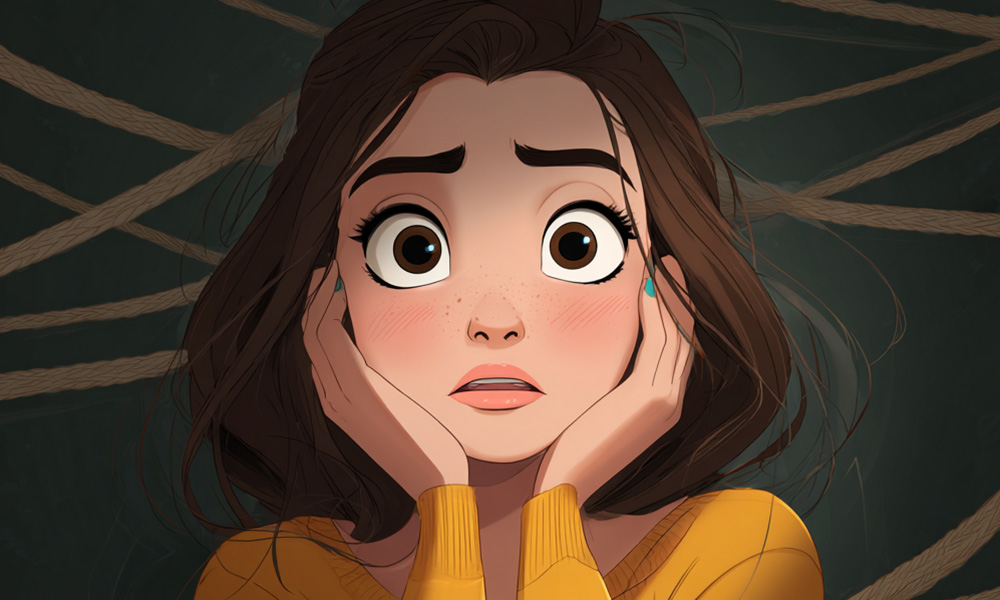
You left. Maybe it was months ago. Maybe years. And as far as everyone else knows, you're fine. You're working. You're functioning. Maybe you've even started dating again.
But here's what you haven't told anyone...
At 2am, when you can't sleep, you're still thinking about him. You check his social media even though you hate yourself every time you do it. You replay conversations in your head, wondering what you could have said differently. You make excuses for what he did—even now, even after everything.
And the worst part? You're ashamed.
You think you should be over this by now. You think the fact that you still care means something is wrong with you. That you're weak. That maybe what you had was actually love—because why else would it still hurt this much?
I need you to hear something that's going to change everything you believe about what you're experiencing right now.
This is not weakness. This is not love. This is trauma bonding.
And it's one of the most powerful psychological forces on earth. It's literally wired into your biology—designed by evolution to keep you attached to avoid abandonment, which for our ancestors meant death.
Your brain is doing exactly what brains do when they've been through what yours has been through. There's nothing broken about you. There's nothing weak about you. You're experiencing a predictable neurological response to an unpredictable, chaotic relationship.
And once you understand what's actually happening inside your brain, you can finally stop blaming yourself—and start breaking free.
I'm Tania. I've been exactly where you are. I tried to leave seven times before I finally got out for good. So when I walk you through these 10 signs today, I'm not giving you theory. I'm giving you what I wish someone had told me.
No shame. No judgment. Just science, clarity, and practical tools you can actually use.
The Neuroscience of Trauma Bonds
Before we get to the 10 signs, I want to give you one piece of information that's going to reframe everything.
Your brain on a trauma bond is chemically identical to your brain on drugs.
That's not a metaphor. That's neuroscience.
Here's what happens in your brain during an abusive relationship:
- During the bad times—the criticism, the fights, the walking on eggshells—your brain floods with cortisol. That's the stress hormone. It keeps you hypervigilant, always watching, always trying to predict what's coming next.
- Then during the good times—the apologies, the tenderness, the 'I'll never do it again'—your brain surges with dopamine. That's the reward chemical. The same one that makes gambling and social media addictive.
- During reconciliation, you get a rush of oxytocin—the bonding hormone. The same chemical that bonds mothers to babies. It cements your attachment to this person.
- And throughout all of it, adrenaline keeps you in survival mode. Your body doesn't know the difference between a lion chasing you and emotional chaos. It just knows: stay alert. Stay attached. Survive.
This cycle—stress, relief, bonding, stress, relief, bonding—creates genuine chemical addiction.
And here's why this matters so much:
Studies show that unpredictable rewards create the strongest addictions. It's why slot machines work. It's why social media is designed the way it is. When you never know if you're going to get kindness or cruelty, your brain becomes obsessed with getting the next good moment.
So if you've been wondering why you can't stop thinking about him... why other relationships feel boring... why you can't just 'move on' like everyone tells you to...
It's because your brain is in withdrawal. And you can't think your way out of withdrawal. You have to heal your way out.
Let's look at the signs so you can see exactly where you are.
The 10 Signs of Trauma Bonding
As I go through these 10 signs, I want you to notice which ones resonate. Don't judge yourself. Don't minimize. Just notice.
Awareness is the first step to freedom. You can't heal what you can't name.
Sign #1: You Defend Them to Others
When friends or family criticize him, you feel the urge to explain. You say things like 'You don't understand him' or 'He's not always like that.' Even now—even after you've left—you feel protective of his reputation.
This happens because the trauma bond creates a sense of 'us against the world.' It makes you feel like you're the only one who truly understands him—the only one who sees the 'real' him underneath the behavior that hurt you.
Here's what's actually true: The version that hurt you was the real him. The charming version was the mask. The fact that you still feel protective is the bond talking, not reality.
If you recognize this in yourself, you're not disloyal for seeing it clearly. You're waking up.
Sign #2: You Minimize What Happened
You catch yourself thinking 'It wasn't that bad' or 'Other people have it worse.' You downplay the abuse—even to yourself. Maybe especially to yourself.
This is your brain's way of protecting itself from the full weight of what happened. If you admitted how bad it really was, you'd have to feel all of it. And that feels impossible.
Minimizing also protects the bond. Because if it 'wasn't that bad,' then the attachment isn't 'that wrong.' If it wasn't really abuse, then maybe you can justify still caring.
But here's the thing: Your nervous system doesn't lie. Your body remembers even when your mind minimizes. And healing requires honesty—not about what you can tolerate, but about what actually happened.
If this is you, the work isn't to dramatize—it's to stop protecting him by shrinking your story.
Sign #3: You Focus on the 'Good Times'
You replay the beginning on a loop. The way he looked at you. The things he said. The gifts, the attention, the way he made you feel like the only woman in the world.
You think: 'If we could just get back to that...'
This is one of the cruelest tricks of abuse: The good times weren't separate from the abuse. They were part of the abuse cycle. That early intensity—sometimes called love bombing—creates powerful attachment. It's what makes the abuse possible and keeps you hooked.
The person in those early memories wasn't the 'real' him before things went wrong. It was a strategy to secure your attachment. And your brain keeps returning there because dopamine marked those moments as incredibly important.
If you keep replaying the good times, you're not being naive. You're caught in a neurological loop. And knowing that is how you start to break it.
Recognizing Yourself in These Signs?
If you're recognizing yourself in these signs, I want you to know—you're not alone, and there's a way forward. I created a free guide called 5 Steps to Reclaim Your Identity After Abuse. It walks you through exactly how to start rebuilding who you are underneath the bond.
Download Free GuideSign #4: You Believe They'll Change
Part of you still holds on to hope. Maybe if he goes to therapy. Maybe if the circumstances were different. Maybe if you had done something differently, he would have become the person you saw in the beginning.
This hope isn't stupid. It's human. It's also how the bond survives.
The trauma bond needs the hope to stay intact. If you accepted that he won't change—truly accepted it—you'd have to accept that the relationship you wanted was never possible. And that's a grief that feels too big to touch.
Here's the hard truth: The trauma bond exists because of the abuse pattern, not despite it. If he actually changed, the bond would weaken. You're not bonded to who he could become. You're bonded to the cycle.
Letting go of the hope isn't giving up on love. It's making room for real love—the kind that doesn't require you to wait for someone to stop hurting you.
Sign #5: You Feel Guilty for Leaving
You worry about him. You wonder if he's okay, if he's taking care of himself, if leaving broke him. You feel guilty for 'abandoning' him—even though he was the one causing harm.
This guilt exists because in an abusive relationship, you're trained to feel responsible for his emotional wellbeing. His happiness becomes your job. His moods become your responsibility to manage.
That programming doesn't just disappear because you left. It stays in your nervous system, whispering that you're wrong for taking care of yourself.
Here's what I need you to understand: His wellbeing was never your responsibility. Not when you were there. Not now. You are allowed to prioritize yourself without guilt. That's not selfish—that's survival. That's health. That's what you deserve.
Sign #6: You Check Their Social Media Obsessively
You know you shouldn't. You tell yourself you'll stop. But somehow, you find yourself checking anyway. His page. Her page. Mutual friends. Anything that gives you a window into his life.
Every time you do it, you feel worse. And you still can't stop.
This is the addiction seeking its fix. Your brain is in withdrawal, and checking on him provides a tiny hit of that chaos you became chemically dependent on. It doesn't matter if what you find makes you feel good or bad—the uncertainty itself is the drug.
Here's what you need to know: Every check resets your recovery. Every time you look, you're feeding the bond, not breaking it. The path forward requires cutting the access—blocking, muting, whatever it takes to stop the cycle.
You're not checking because you need to know. You're checking because you're addicted to the not-knowing. And naming that is the first step to stopping.
Sign #7: You Compare Everyone to Them
New people feel flat. Healthy attention feels boring. You meet someone kind and stable and think, 'There's no spark.' You find yourself thinking no one will ever make you feel the way he did.
You're right—and here's why that's actually good news.
Your nervous system has been calibrated to chaos. The highs and lows of an abusive relationship create intense neurological activation. When you meet someone who doesn't trigger that response, it feels like something's missing.
But what you're calling 'boring' is actually what safe feels like to a traumatized nervous system.
The absence of anxiety isn't the absence of love. It's the presence of peace. Healthy love doesn't feel like addiction. It doesn't feel like you'll die without it. It feels calm. It feels steady. And your nervous system can learn to recognize that as desirable—but it takes time and intentional healing.
If stable people feel boring to you right now, you're not broken. You're recalibrating. And that recalibration is actually progress.
Sign #8: You Feel Like Part of You Is Missing
There's an emptiness that won't go away. You feel incomplete, like you left something behind. Like a piece of yourself is still with him somehow.
Here's what's really happening:
In an abusive relationship, your identity gets consumed. You spend so much energy managing his moods, anticipating his needs, becoming who he wanted you to be—that you lose touch with who you actually are.
The emptiness you're feeling isn't him being gone. It's YOU being gone. It's the hollow space where your identity used to live before it was replaced by survival mode.
This is why so much of healing isn't about processing him—it's about rediscovering you. What do you like? What do you want? What brings you joy when no one else is watching?
If you feel like a piece is missing, you're not wrong. But that piece isn't him. It's you. And you can find her again.
Sign #9: You Remember the Beginning Constantly
The early days play on repeat. The way he looked at you. The promises he made. The version of him that existed before everything went wrong.
Your brain keeps returning there because it's trying to reconcile two completely different realities: the person who seemed to love you and the person who hurt you. It doesn't make sense. So your mind keeps going back, searching for answers, trying to figure out where things went wrong.
Here's the painful truth you need to hear: That person at the beginning wasn't real. It was a performance to secure your attachment. The version you keep returning to in your mind never actually existed. You're mourning someone who was always a fiction.
And once you can accept that—truly accept it—you can stop waiting for that person to come back. Because he was never really there.
Sign #10: You Would Go Back If They Changed
Somewhere deep inside, there's a voice that whispers: 'If he got help... if he really changed... maybe...'
You know you probably shouldn't think this. But you do.
This is the trauma bond's final hook. It keeps you available. It keeps you waiting. It prevents you from fully emotionally separating, because some part of you is still holding the door open—just in case.
Here's what women who break free understand: You're not mourning a person. You're mourning a projection. A hope. An investment. You're grieving the future you thought you'd have, the love you thought was real, the years you gave.
Letting go of that fiction—fully, finally—is how freedom begins. Not because he's unforgivable, but because your future deserves to be built on reality, not on waiting for someone to become who they never were.
So—how many of those signs did you recognize?
Whatever your number is, I want you to hear this: Recognizing these patterns isn't weakness. It's the beginning of freedom. You can't break what you can't name. And now you can name it.
How to Start Breaking Free
Now let's talk about what actually works. Because understanding trauma bonding is important—but it's not enough. You need tools.
I'm going to give you three things you can do starting today that will begin breaking the bond. These aren't complicated. But they're powerful.
Action #1: Name It When It Happens
When the thoughts come—and they will come—don't try to fight them or shame yourself. Instead, name what's happening.
Say to yourself: "This is a trauma bond. This is addiction, not love. My brain is in withdrawal, and it will pass."
This does something neurologically. It moves the experience from the emotional brain to the logical brain. It creates space between you and the feeling. You're not the craving—you're the person observing the craving.
Do this every single time. It won't feel like it's working at first. Keep doing it anyway.
Action #2: Cut the Digital Supply
You cannot heal a wound you keep reopening. Every time you check his social media, you're giving the addiction what it wants. You're feeding the bond.
Block. Mute. Delete. Whatever you need to do to remove access.
If you're not ready to block, have a friend change your password and not tell you. Use an app blocker. Make it hard to check.
The first 72 hours will be the hardest. Expect that. Plan for it. And know that every day without checking is rewiring your brain toward freedom.
Action #3: Start the Identity Work
The trauma bond weakens as YOU get stronger. Not stronger as in 'tough it out.' Stronger as in 'reconnected to who you actually are.'
Start asking yourself: Who was I before this relationship? What did I used to love? What did I dream about before I was consumed by surviving?
If you don't know the answers, that's okay. That's normal. The work isn't to remember who you were—it's to discover who you're becoming.
Survivors stay focused on the abuser. Women who thrive turn their focus back to themselves. Not out of selfishness—out of self-reclamation.
Freedom Is Possible
I want you to know that what I just taught you isn't theory. It's what I lived.
I was in two abusive relationships over 18 years. I tried to leave seven times before I finally made it out. The last time I left, my face was so swollen and bruised I was unrecognizable. While he was in police custody, I packed a bag, grabbed my son, my laptop, and my two dogs, and drove 16 hours straight to my mom's house.
That was over fourteen years ago.
Today, I'm happily remarried. I have two daughters. I'm a published author. And most importantly—I'm free. Not 'I left' free. But 'I rarely think of him, and when I do, I feel nothing' free.
I'm not telling you this to talk about myself. I'm telling you because I need you to know that where you are right now is not where you have to stay.
The bond feels permanent. It's not. Your brain feels hijacked. It can heal. The hopelessness feels true. It's lying to you. You can get to the other side of this. Not just surviving—actually thriving.
Your Next Step
The first step to breaking a trauma bond is reclaiming your identity. Not who he made you. Not who you had to become to survive. Who you actually are underneath all of that.
I created a free guide to help you start that process: 5 Steps to Reclaim Your Identity After Abuse. It's the same foundation I used to go from 'I don't know who I am anymore' to building a life I genuinely love.
Download Your Free Guide
Start reconnecting with the person you've been missing—yourself.
Get Free Guide NowAnd if you're ready for more support, explore my coaching programs—from group courses to 1:1 VIP coaching. I'm here to walk this path with you.
Before You Go
You are not weak for struggling with this. You are not broken for still caring. You are a human being whose brain did exactly what brains do in impossible situations.
The bond is real—but so is your ability to break it. This is addiction, not love. Your brain is healing. And you're already closer to freedom than you think.
Found this helpful? Share it with someone who needs to read this.