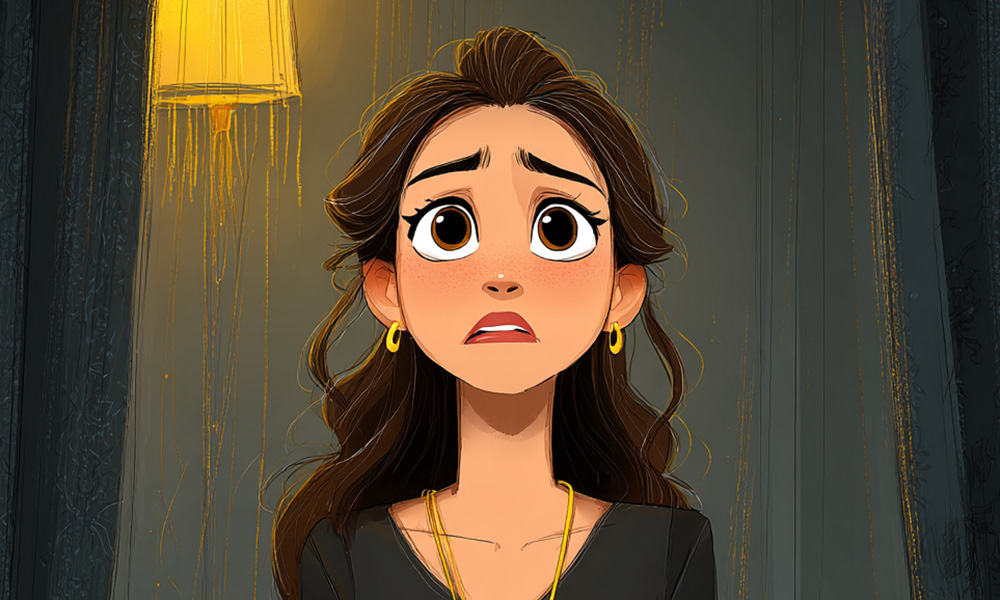
You left someone who hurt you.
And now you're grieving.
And that doesn't make any sense to you.
Because how do you mourn someone who caused you pain? How do you miss someone you had to escape from? How do you feel this crushing sadness over the end of something that was destroying you?
Everyone around you seems confused too. They thought you'd be relieved. They thought you'd be celebrating. They keep saying things like 'You're better off' and 'Good riddance' and 'Now you can finally be happy.'
And you know they're right. Logically, you know they're right.
But you're not relieved. You're devastated. And you can't explain it to anyone—including yourself.
If this is where you are right now, I need you to hear something:
You are not crazy.
There is nothing wrong with you for grieving.
And here's why: You're not actually grieving him. You're grieving something much bigger—something no one prepares you for and almost no one talks about.
You're grieving what never was.
I'm Tania. I went through this exact grief—the confusing, shameful, 'why am I crying over someone who hurt me' grief. And I'm going to help you understand exactly what you're mourning, why it hurts so much, and how to move through it without getting stuck.
Because this grief is real. It deserves to be honored. And it won't last forever—but you can't skip it.
What You're Really Grieving
When you grieve after leaving an abusive relationship, you're not grieving one thing. You're grieving many things at once. And most of them have nothing to do with the actual person who hurt you.
Let me name them.
You're Grieving the Person You Thought They Were
In the beginning, there was someone else. Someone attentive, loving, devoted. Someone who made you feel chosen, special, seen.
That person felt real. The connection felt real. The way they looked at you, the things they said—it all felt like finally, finally you found what you'd been looking for.
And then, slowly or suddenly, that person disappeared. And someone else took their place.
Here's the painful truth: The person in the beginning wasn't real. It was a performance—conscious or not—to secure your attachment. But your feelings for that person were real. Your hopes were real. Your love was real.
So when you grieve, you're grieving someone who never actually existed. You're mourning a fiction. And that's one of the cruelest kinds of grief there is—because you can't even point to what you lost.
You're Grieving the Future You Imagined
When you were in the relationship, you had a future in your mind. A life you were building together. Maybe a home. Maybe children. Maybe growing old together. Maybe just the simple vision of being loved and safe.
That future is gone now. Not because it ended—but because you realized it was never actually possible. The future you imagined was built on a foundation that didn't exist.
Grieving a future is uniquely painful because you're not mourning memories—you're mourning possibilities. Dreams. The life you thought you'd have. And the fact that you have to start over, imagining something completely different.
You're Grieving the Time You Lost
Months. Years. Maybe decades. Time you spent surviving instead of living. Time you spent managing someone else's moods instead of pursuing your own dreams. Time you can never get back.
This grief can come with rage—and that's valid. It can come with deep sadness—and that's valid too. You look back and see the version of yourself that could have existed, the life you could have built, and you mourn her. You mourn what she might have become.
You're Grieving Your Innocence
Before this relationship, you believed certain things about love. Maybe you believed people who love you don't hurt you. Maybe you believed you could tell the difference between someone safe and someone dangerous. Maybe you believed in your own judgment.
That innocence is gone now. You know things about the world—and about yourself—that you can't unknow. And there's grief in that. There's a loss of the person you were before you learned these lessons the hard way.
You're Grieving the Love You Gave
You loved with everything you had. You tried. You believed. You gave pieces of yourself—your time, your energy, your hope, your devotion—to someone who didn't honor them.
That love was real, even if the relationship wasn't what you thought. And grieving the love you gave isn't about wanting it back—it's about honoring the fact that you gave something precious, and it wasn't treated the way it deserved to be treated.
So when someone asks 'Why are you grieving someone who hurt you?'—now you have the answer.
You're not grieving him. You're grieving the projection, the future, the time, the innocence, and the love. You're grieving what never was—and that's one of the heaviest griefs there is.
Does This Resonate With You?
If this is resonating, I created a free guide to help you start rebuilding after this kind of loss. 5 Steps to Reclaim Your Identity After Abuse walks you through the process of finding yourself again.
Download Free GuideWhy This Grief Is So Hard
This grief is uniquely difficult for reasons that most people don't understand. Let me name why it's so hard—because understanding this will help you stop judging yourself for struggling.
No One Validates It
When someone dies, the world acknowledges your grief. People send flowers. They give you time. They expect you to be sad.
But when you leave an abusive relationship? People expect you to be happy. Relieved. Moving on. They don't have a framework for 'I'm devastated about the end of something that was hurting me.' So your grief goes unwitnessed—or worse, gets judged.
You end up grieving alone, in secret, feeling like something is wrong with you for having these feelings at all.
The Person Is Still Alive
In death grief, the person is gone. It's final. There's no possibility of them coming back.
In this grief, the person still exists. They're out there, living their life. Maybe with someone new. Maybe posting on social media like nothing happened. And part of you keeps thinking—irrationally—that if they just changed, if they just became the person they were in the beginning...
That hope, that fantasy of reconciliation, makes the grief messier. It's harder to reach acceptance when the door feels like it could theoretically reopen.
You're Grieving Two Realities at Once
Your brain is trying to hold two completely contradictory truths: This person hurt me AND I loved them. This relationship was bad for me AND I miss it. Leaving was the right choice AND it feels like dying.
Most grief is painful but simple—you lost something good. This grief is painful AND confusing—you're mourning something that was simultaneously good and bad, real and fake, chosen and forced.
Your brain keeps trying to reconcile these contradictions, and it can't. That's exhausting. And that's why this grief can feel like it's taking over your whole mind.
Grief Gets Mixed with Trauma
You're not just grieving—you're healing from trauma at the same time. The sadness comes with anxiety. The loss comes with flashbacks. The mourning comes with hypervigilance and exhaustion and all the other symptoms of a nervous system that's been through too much.
You're doing double the emotional work. And it's no wonder you're exhausted.
How to Move Through This Grief
Now that you understand what you're grieving and why it's so hard, let me give you some tools for actually moving through it. Because here's what I need you to know: You can't skip this grief. You can't think your way around it or push past it. But you CAN move through it—with intention, with self-compassion, and with the right practices.
Practice #1: Name What You're Actually Grieving
The grief becomes more manageable when you can name it specifically. Instead of 'I miss him'—which feels confusing and shameful—try naming the specific loss.
'I'm grieving the future I thought I'd have.'
'I'm grieving the years I spent surviving.'
'I'm grieving the person I thought he was.'
'I'm grieving my own innocence.'
When you name it, you can see it clearly. And when you can see it clearly, you can process it—instead of just feeling overwhelmed by a fog of sadness you can't explain.
Practice #2: Give Your Grief a Container
If you let grief run wild, it will take over everything. But if you try to suppress it completely, it will come out sideways—as anxiety, numbness, or unexpected breakdowns.
Instead, give your grief a container. Set aside a specific time—maybe 20 minutes a day—to actively grieve. During that time, you let yourself feel it fully. You cry. You journal. You sit with the sadness. You don't distract yourself.
And when the time is up, you do something that brings you back to the present. A walk. A shower. A conversation with someone who makes you feel grounded.
The container honors the grief AND protects you from drowning in it.
Practice #3: Write the Four Letters
This is a powerful technique for processing complex grief. You write four letters—and you never send them.
- Letter One is Anger. Everything you're furious about. Every hurt, betrayal, injustice. Hold nothing back. Let it be ugly.
- Letter Two is Grief. Everything you'll miss. Everything you mourn. Everything you wish had been different. Let yourself be sad.
- Letter Three is Forgiveness—but not to them. To yourself. Forgive yourself for staying. For believing. For trying. For loving. For all the things you've been judging yourself for.
- Letter Four is Goodbye. Final words. Closing the chapter. Ending the story. Not because you're 'over it'—but because you're choosing to turn toward your future instead of staying locked in the past.
When you're done, burn them safely or bury them. This isn't about communication—it's about completion. It's about giving your grief somewhere to go.
Practice #4: Mourn Without Minimizing
You might be tempted to tell yourself 'Other people have it worse' or 'At least I got out' or 'I should just be grateful.'
And while gratitude has its place, it doesn't cancel out grief. You can be grateful you left AND devastated by what you lost. You can know it was the right decision AND still mourn.
Don't minimize your grief to make other people comfortable. Don't shrink it because it doesn't fit the narrative of 'you should be happy now.' Your loss is real. Your grief is valid. Honor it.
In the Thick of Grief Right Now?
My free guide can help you start moving forward—not by skipping the grief, but by rebuilding yourself while you process it. 5 Steps to Reclaim Your Identity After Abuse. Because healing happens in layers.
Download Free GuideThe Shift That Changes Everything
Before we close, I want to give you one more insight—because this is the shift that changed everything for me, and I think it can change everything for you.
This grief feels like it's about the past—about what you lost, what was taken, what can never be recovered.
But really, this grief is about your capacity to love.
You loved deeply. You committed fully. You gave yourself to something with your whole heart. The fact that it wasn't honored, the fact that it wasn't reciprocated the way you deserved—that doesn't diminish what you brought to it.
Your grief is evidence of your capacity for love. And that capacity isn't lost—it's waiting to be redirected.
Right now, you might not be ready to love someone else. But you can start redirecting that love toward yourself. Toward rebuilding. Toward the future you're going to create—a future that will be built on reality, on truth, on what you actually deserve.
The same heart that grieves this deeply is the heart that will love your new life even more deeply. This grief isn't a sign of weakness. It's a sign of what you're capable of—and what's possible on the other side of this.
The Grief Does End
I grieved for longer than I want to admit.
I grieved the 18 years I spent in abusive relationships. I grieved the person I thought my ex was—the one who showered me and my son with gifts in the beginning, who made me believe I'd finally found safety. I grieved the future I'd imagined. I grieved the time. I grieved my own innocence.
And I felt ashamed of all of it—until I understood what I was really mourning.
Once I stopped judging the grief and started honoring it, it began to move through me instead of getting stuck in me.
Today, I'm on the other side of that grief. Not because I forgot—but because I processed. Because I let myself mourn what never was so I could build what actually is.
That's where you're going too. The grief won't last forever. But you do have to move through it to get to the other side.
Your Next Steps
So here's what I want you to take from this:
- First: You're not crazy for grieving someone who hurt you. You're grieving the projection, the future, the time, the innocence, and the love you gave. That's a lot. And it deserves to be honored.
- Second: You can't skip this grief. But you can move through it with intention. Name it specifically. Give it a container. Write the letters. Don't minimize.
- Third: This grief is evidence of your capacity to love. And that capacity is going to serve you beautifully in the life you're building on the other side.
Download Your Free Guide
5 Steps to Reclaim Your Identity After Abuse will help you start that rebuilding process. Not instead of grieving, but alongside it.
Get Free Guide NowAnd if you're ready for more support, explore my coaching programs—from group courses to 1:1 VIP coaching. I'm here to walk this path with you.
Before You Go
Your grief is real. It's valid. And it will not last forever.
Let yourself mourn what never was—so you can finally start building what will be.
Found this helpful? Share it with someone who needs to read this.